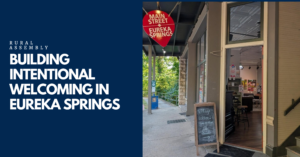


In recognition of Welcoming Week, Taneum Fotheringill spoke with Jackie Wolven in Eureka Springs, AR. Eureka Springs is one of eleven communities in this year’s Rural Welcoming Initiative. To learn more about past Rural Assembly collaborations with Welcoming America, revisit the Routes to Roots podcast series.
This conversation has been edited for length and clarity.
Taneum Fotheringill, Rural Assembly: Tell me a little bit about Eureka Springs, Arkansas. Help me get a sense of what I would see and feel if I came through town for a visit.
Jackie Wolven: Eureka Springs, Arkansas is in the northwest corner of Arkansas. We are in the Ozarks. It’s our own biosphere and you’ll find plants and animals that only exist here. Eureka Springs itself sits on Osage land originally, also the Caddo. It’s a small mountain town with 2,000 residents and about 2,000 people around the mountain town itself. It is a destination and always has been. There is a festival every weekend and fifty parades a year. It is something else to live in and to experience.
RA: As the director of Main Street Eureka Springs, how do you see social trust coming to life in the work of welcoming? For people who are coming to Eureka Springs for the first time, or have maybe lived in the area and not felt included or that there is social cohesion, how do you build lasting feelings of welcome, inclusion, cohesion?
JW: Well, it’s a practice, that’s for sure. It’s something that you have to intentionally do. Eureka Springs is a place where people choose to be – most people were not born here. We chose to be in this place, but we come with baggage. We all do, myself included. And that baggage that we come with is the sense of not belonging. We are looking for a place to belong. You can see this everywhere, but it is magnified here.
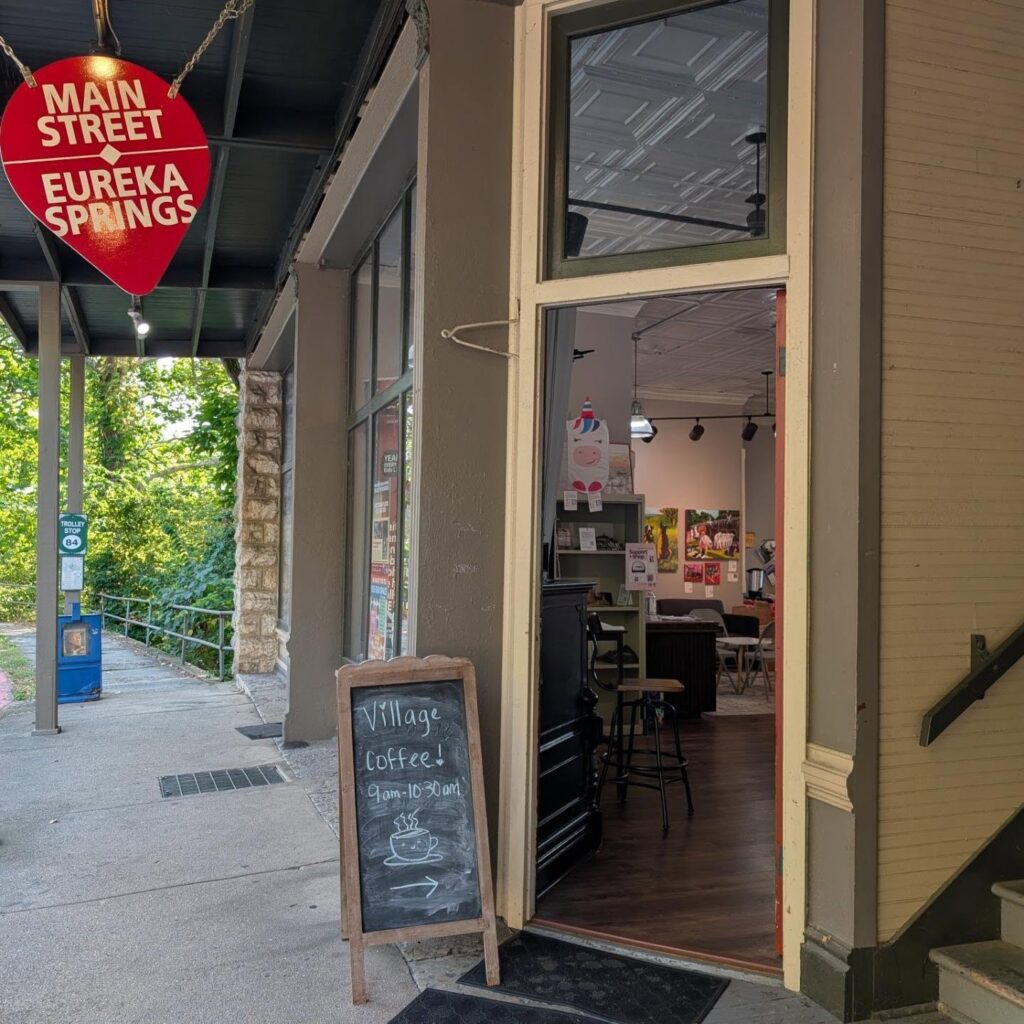
You have to build trust because people don’t automatically feel like they belong to something. You have to make the effort to help them trust the systems, the places, the people. That could look as simple as something like the coffee we host every Monday morning called Village Coffee. It’s free and you can come, hang out, and have conversation.
Organizations, cities, governments have to build in welcoming as part of their intentional work. How can we help people work through a problem or be part of an effort, instead of othering people?
“Organizations, cities, governments have to build in welcoming as part of their intentional work.“
RA: Part of how you’ve chosen to engage in welcoming is by joining the Rural Welcoming Initiative (RWI). Through this program you get access to technical assistance as well as a network of support like people in cities and towns who have participated before. How do you expect Eureka Springs will grow through your experience?
JW: Welcoming America’s program is eye-opening of what you are not doing as a community. It’s a real reckoning. The way we approached it as an organization was to form a subcommittee, then walk through the assessment with our city and county. We’ve just started and we’re trying to form the effort in a cross-sector way.
We are committed to the idea of ‘if people knew better, could they do better? And what do we already have that we don’t know about or realize?
For instance, we found out that in our county there was a person working in the county clerk’s office who recognized that after people went to court they were supposed to come back to court but they often didn’t come back if the [materials] weren’t provided in their language. The county didn’t have a resource. This employee had t bn9he materials translated into ten languages so she could see if she could help these people stay in line with the legal system. They saw this huge increase of people following up on what they needed to do.
We had no idea that there was this one employee doing this one program on her own to help the community at large be better served.
Part of our work through the Welcoming America initiative is to highlight things like this. That has been the most exciting part of it – that there are lots of individuals and groups and initiatives happening, but no one had been tying them up together. And we feel like that’s part of welcoming because if someone knows about something, then they can actually access it, use it, feel welcome in the place that they’re living, you know?
So that’s been an exciting part of RWI for us. There are ten areas to assess. We think we might be failing in many of those, but we are okay with that because it will allow us to have those conversations – to say, did you know you could offer translation? Or did you know that there might be volunteers who would translate at a student teacher conference? The more connected we can be, the better that will be for everybody.
RA: Figuring out what you don’t know is an essential piece of the puzzle. It sounds like doing the assessment and being part of the Rural Welcoming Initiative is really aligned. It sounds like Eureka Springs is well suited to festivals and celebrations like Welcoming Week.
JW: We are. This year our welcoming week is really about announcing that we’re doing the assessment. Also to build the infrastructure for next year so that we can have a really strong welcoming week. We’ve already planted the seeds with our local library and our community center so that we’re not creating new programming, but asking, ‘What do you offer that might be in this realm?’
So that’s what we’re hoping welcoming week becomes for us, a way to highlight all of those efforts being done across the city and the county.
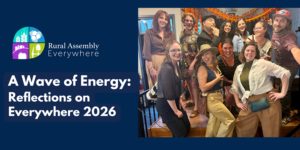
RA: This year you’re really focused on getting everything lined up, pulling resources together, figuring out what’s going on so that you can build forward. One of the steps you took this year was through Rural Assembly Everywhere, by inviting people to come celebrate the kickoff. Can you tell me a little bit about that?
JW: It was fantastic. We brought 35 leaders into our space and watched the first portion of the video. We were able to take that conversation and help that group do a couple of things.
We were able to help them understand that we are rural. Across America, you will all laugh that in Eureka Springs, Arkansas, we do not consider ourselves rural. It is a very cosmopolitan kind of place. All these people come from all over the country to be here. There are 27 restaurants. This is not the normal rural experience that people are having.
But we are a rural community of 2000. That is who we are. The people who understand it are the nonprofit leaders because they’re grant writers. They understood immediately because that’s where we fit in every grant opportunity. But the city itself had trouble making that fit for them. We saw it as right sizing. It’s better to help people know who they really are instead of pretending to be who you aren’t.
Then the second piece is that we launched Welcoming Week and the Welcoming America project. We were able to explain it to a group of people who we felt would need to understand because we would be going to them to assess. We should get you in the room before we ask you a bunch of questions, right? The support was amazing. Our mayor said that he was thrilled to have this work happen and was delighted that Main Street had taken this on as part of our work plan and that it was long overdue. And that’s really heartening to hear that he got it. Especially in the time that we’re in today. I was hesitant to be honest. I felt like maybe the city wouldn’t want the spotlight of this on them.
RA: As I’m listening to you describe everything that’s going on through the Rural Welcoming Initiative cohort, your story in Eureka Springs is such a good one of figuring out where to start, doing that planning, building that momentum and getting going. I’ll be excited to hear how things continue to unfold in the years to come.
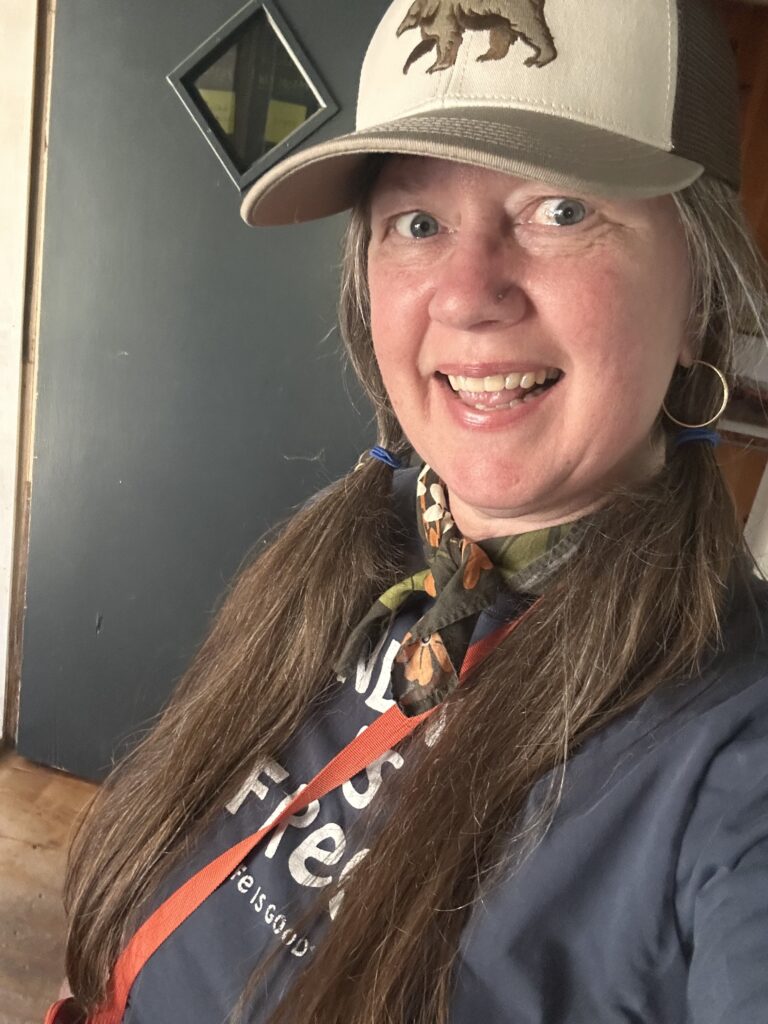
Jackie Wolven is the Executive Director of Main Street Eureka Springs, an accredited Main Street America program in a town of 2,000 in the Arkansas Ozarks. She has 18 years of on-the-ground community development experience and is a Certified Group Facilitator, working with everyone from café servers to elected officials. Through Do Good Work Studio she speaks and facilitates on civic engagement, connection, and small-town possibility, and she is a member of the Weave Speakers Bureau. She is also a working artist. Her whole body of work rests on one idea: love where you are.