
Story and illustration by Nhatt Nichols
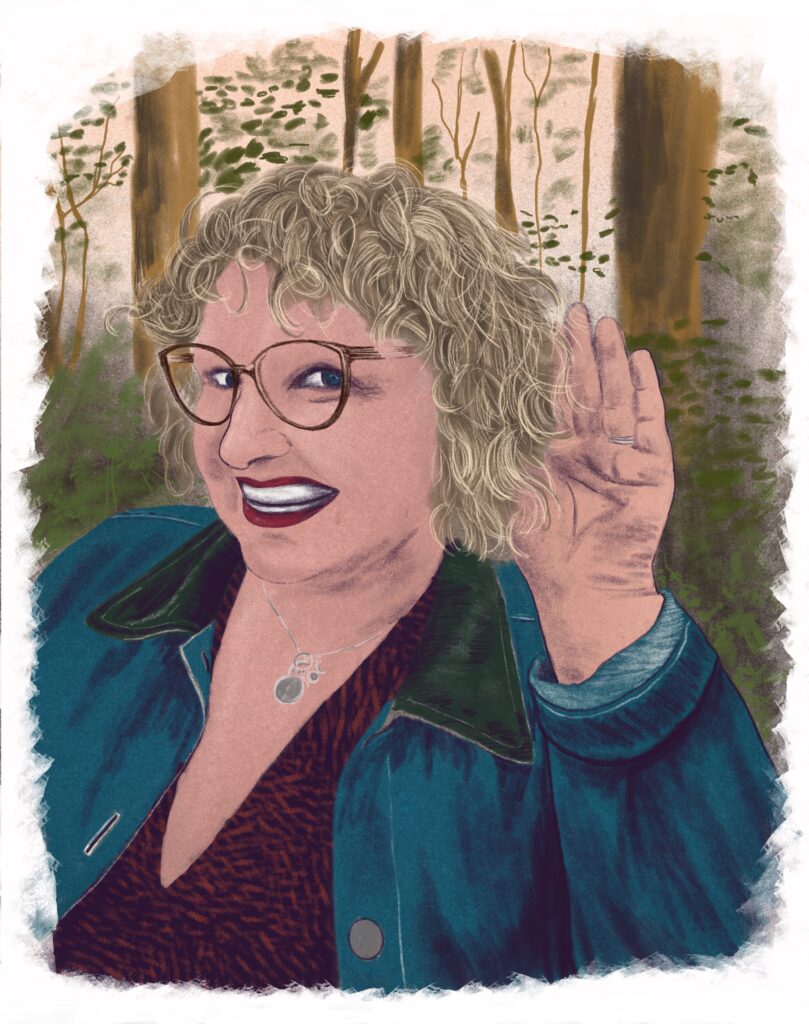
“If you don’t know what people are thinking about something, if you don’t know what to think about something, if you feel overwhelmed and kind of lost, frustrated, confused or sad, pick up a clipboard and go talk to somebody,” advises Beth Howard. “Go knock on a door and ask people what they think. Sit on the porch and talk with a neighbor.”
Beth Howard is a professional community organizer and the author of Song for a Hard-Hit People: A Memoir of Anti-Racist Solidarity From a Coal Miner’s Daughter. The memoir documents her childhood in Eastern Kentucky, and her life knocking on doors and showing up to community church gatherings as an organizer and activist in the South for two decades. She is currently the Cultural Strategist for Showing Up for Racial Justice (SURJ), the largest national organization bringing white people into the fight for racial and economic justice.
Connecting with people is something Howard excels at. While reading her memoir, I was struck by how much pressure we put on rural people in places around elections. There’s a pervasive narrative that rural people vote against their own interests because they’re too bigoted to do otherwise. Given Howard’s experience growing up in Appalachia and her work as an organizer, I wanted to know whether she finds the way people understand rural places frustrating.
“I think rural people get this generally, but especially those of us in places like Appalachia. We’re the reason people can’t have nice things; we’re not smart enough, we’re all hateful and backwards,” Howard said. “When I’m talking about our place, I try not to feed into stereotypes. I’ve seen us, myself included, go really far the other way, to be like, there’s no problems here, we’re all on a porch with our granny, quilting, and having happy family time.”
“Anytime that I get the opportunity to talk to someone, especially people outside of my echo chamber, I’m very pleasantly surprised and feel more hopeful and connected.” — Beth Howard
But that isn’t the whole truth of a place, and Howard has resisted the impulse to simplify the narrative of her home down into one stereotype or another. In her book, she talks about how the South has the same problems as many places that struggle economically. “Those struggles can manifest in ways that reinforce negative stereotypes about us: violence, addiction, poverty,” Howard said. “But also, we defy stereotypes, we have this long history of militant worker uprisings, multiracial solidarity, and we help and love each other.”
Leaning into these complexities of place, of a rural home, is what makes Howard a strong advocate and writer. Though I’m from the other side of the country, I understand the desire to smooth over the rough edges of poverty and struggle, to provide a sanitised version of home that tries to balance national narratives about rural folk. But, like Howard, I understand that the only way we’re going to find our way through is by acknowledging our difficulties and leaning into our curiosity about each other.
“Anytime that I get the opportunity to talk to someone, especially people outside of my echo chamber, I’m very pleasantly surprised and feel more hopeful and connected,” Howard confirmed.
So how do we reach across the divide and connect with people we may not agree with? “I think one of the biggest lessons for me when I was learning to organize is the importance of listening and asking really good, open-ended questions,” Howard said.
That’s been my experience, too. When I’m not speaking to interesting people for Rural Assembly, I run a small news outlet in rural Washington State. As we’ve been gearing up for the next election cycle, we’ve been trying to get out from behind our desks and ask people on all sides of the political divide questions that complicate the narrative. I’ve found through my work that folk in my community have more in common than they think they do, something that resonated with Howard’s experiences, too.
“We both might connect and worry about the same things. We want food on the table. We want a roof over people’s heads. We want to go to the doctor. We want our community and ourselves to be safe and happy, and I think we can build from there,” Howard said.
And building from there is deeply important work. Howard advocates for getting out into your community and finding other people who are doing organizing work that resonates with you, and offering to lend a hand, to learn more about your community without centering your own ideas.
“Approach with a lot of curiosity and questions, hear people and let them tell you what they think and what they’re working on before we start telling them what to do,” Howard recommends. She compares being an effective organizer with being a good neighbor; it’s about building bridges, talking through things, and showing up when you’re needed.
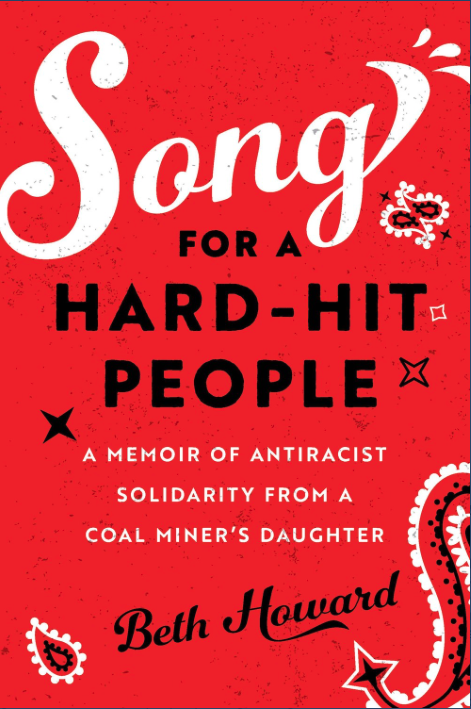
Beth Howard’s book, Song for a Hard-Hit People: A Memoir of Antiracist Solidarity from a Coal Miner’s Daughter, is out on April 21 from Haymarket Books.